
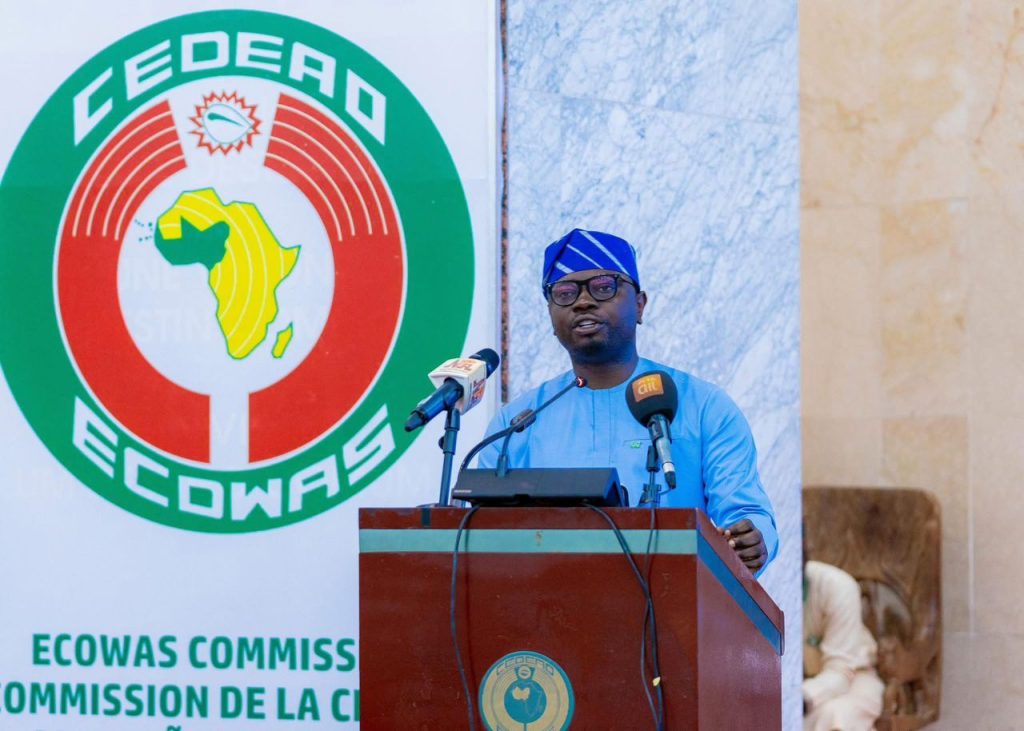
By: Lekan Tajudeen
The Honourable Minister for Youth Development, Comrade Ayodele Olawande has, in recent times, emerged as a recurring subject within Nigeria’s social media ecosystem. A critical examination of this trend suggests that the discourse is not wholly organic. The disproportionate focus, the recycling of narratives, and the personalized nature of the commentary point to a phenomenon where the quest for relevance and digital capital outweighs constructive critique. Consequently, what was intended as character denigration has instead become a self-revealing exercise — exposing the strategic desperation and fixation of the actors involved.
It is a profound irony that the very demographic the Honourable Minister represents — Nigeria’s youth, from whom society expects the highest standards of fairness, justice, and objectivity — has become emblematic of the opposite. In lieu of evidence-based critique or ideological engagement, public discourse has been corroded by a culture of politicized defamation. Character assassination has ceased to be a fringe tactic and has instead been institutionalized as the principal weapon of opposition, deployed not to interrogate policy but to annihilate personality. This inversion betrays a deeper malaise: the abandonment of principle for the expediency of digital mob action.
Within the history of the youth institution, Honourable Ayodele Olawande is distinguished not merely as the youngest individual to assume office, but as the most experientially grounded. His formative exposure to the complexities of grassroots realities — from policy corridors to the unfiltered dynamics of street-level engagement — has equipped him with a nuanced fluency in the language, aspirations, and challenges of Nigerian youth. This synthesis of institutional insight and lived experience translates into a rare capacity for empathetic and effective representation.
Much of the prevailing frustration directed at the Honourable Minister stems from the erroneous expectation of direct job distribution since his assumption of office. This sentiment, however, reflects a fundamental misreading of the Ministry’s statutory mandate. The Ministry of Youth Development is not constituted as an employment agency, nor is it statutorily empowered for mass job creation. Its core responsibility, which has remained the Minister’s central focus, is youth development — encompassing capacity building, skills acquisition, policy advocacy, and the creation of enabling ecosystems for enterprise. To conflate the absence of direct job handouts with ministerial failure is to ignore both institutional design and fiscal reality.
Critics on social media have chosen to turn a blind eye to verifiable milestones under the Honourable Minister’s stewardship. The establishment of the Nigeria Youth Academy, which has trained approximately 60,000 young Nigerians, is conspicuously absent from their narratives — as are the startup grants of up to ₦1 million awarded to no fewer than 500 beneficiaries. Equally ignored are strategic interventions such as YouthCred, which integrates credit access with financial literacy; NELFUND, which expands educational access; and the Skill Hubs initiative developed in partnership with Qatar etc. This selective blindness evokes the African proverb: “The eyes of hatred see no good.”
Honourable Ayodele Olawande is not the problem confronting Nigeria. He is, rather, a selfless steward who has leveraged every opportunity to contribute his quota and build a legacy. The offering of ideas and critiques need not be accompanied by condescension or personal vilification. In a nation committed to progress, civic engagement must be predicated on openness, intellectual honesty, and a genuine desire for reform. It is only when criticism is constructive and articulated with dignity that those in positions of responsibility can apprehend its merit and translate it into meaningful action.
In mature democracies, criticism is a scalpel, not a sledgehammer — its purpose is to refine, not to destroy.
Ayodele Olawande: Beyond The Youngest, Distinguished By Experience
By: Lekan Tajudeen
The Honourable Minister for Youth Development, Comrade Ayodele Olawande has, in recent times, emerged as a recurring subject within Nigeria’s social media ecosystem. A critical examination of this trend suggests that the discourse is not wholly organic. The disproportionate focus, the recycling of narratives, and the personalized nature of the commentary point to a phenomenon where the quest for relevance and digital capital outweighs constructive critique. Consequently, what was intended as character denigration has instead become a self-revealing exercise — exposing the strategic desperation and fixation of the actors involved.
It is a profound irony that the very demographic the Honourable Minister represents — Nigeria’s youth, from whom society expects the highest standards of fairness, justice, and objectivity — has become emblematic of the opposite. In lieu of evidence-based critique or ideological engagement, public discourse has been corroded by a culture of politicized defamation. Character assassination has ceased to be a fringe tactic and has instead been institutionalized as the principal weapon of opposition, deployed not to interrogate policy but to annihilate personality. This inversion betrays a deeper malaise: the abandonment of principle for the expediency of digital mob action.
Within the history of the youth institution, Honourable Ayodele Olawande is distinguished not merely as the youngest individual to assume office, but as the most experientially grounded. His formative exposure to the complexities of grassroots realities — from policy corridors to the unfiltered dynamics of street-level engagement — has equipped him with a nuanced fluency in the language, aspirations, and challenges of Nigerian youth. This synthesis of institutional insight and lived experience translates into a rare capacity for empathetic and effective representation.
Much of the prevailing frustration directed at the Honourable Minister stems from the erroneous expectation of direct job distribution since his assumption of office. This sentiment, however, reflects a fundamental misreading of the Ministry’s statutory mandate. The Ministry of Youth Development is not constituted as an employment agency, nor is it statutorily empowered for mass job creation. Its core responsibility, which has remained the Minister’s central focus, is youth development — encompassing capacity building, skills acquisition, policy advocacy, and the creation of enabling ecosystems for enterprise. To conflate the absence of direct job handouts with ministerial failure is to ignore both institutional design and fiscal reality.
Critics on social media have chosen to turn a blind eye to verifiable milestones under the Honourable Minister’s stewardship. The establishment of the Nigeria Youth Academy, which has trained approximately 60,000 young Nigerians, is conspicuously absent from their narratives — as are the startup grants of up to ₦1 million awarded to no fewer than 500 beneficiaries. Equally ignored are strategic interventions such as YouthCred, which integrates credit access with financial literacy; NELFUND, which expands educational access; and the Skill Hubs initiative developed in partnership with Qatar etc. This selective blindness evokes the African proverb: “The eyes of hatred see no good.”
Honourable Ayodele Olawande is not the problem confronting Nigeria. He is, rather, a selfless steward who has leveraged every opportunity to contribute his quota and build a legacy. The offering of ideas and critiques need not be accompanied by condescension or personal vilification. In a nation committed to progress, civic engagement must be predicated on openness, intellectual honesty, and a genuine desire for reform. It is only when criticism is constructive and articulated with dignity that those in positions of responsibility can apprehend its merit and translate it into meaningful action.
In mature democracies, criticism is a scalpel, not a sledgehammer — its purpose is to refine, not to destroy.