
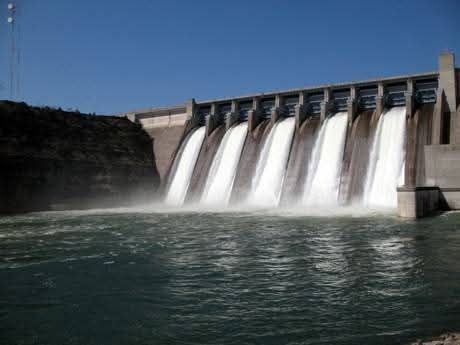
For decades, three great dams in southern Kano held back billions of cubic metres of water while the farmlands around them waited. Tiga Dam was completed in 1974, Kafin Chiri in 1975 and Challawa Gorge in 1992. Each was built with the promise of year round farming, yet large stretches of the land they were meant to serve stayed dry once the rains ended. It has taken the vision and political will of President Bola Ahmed Tinubu to finally put that old promise to work.
The Kano River Irrigation Project intervention is a special ecological intervention of the Tinubu administration, implemented by the Ecological Project Office in the Office of the Secretary to the Government of the Federation. It sits squarely within the President’s Renewed Hope Agenda, which places food security, agricultural productivity, job creation and the welfare of rural Nigerians at the centre of national development. Its purpose is simple to state and ambitious in scale: rehabilitate and expand irrigation infrastructure at the three dams, open new sectors for cultivation, and in doing so strengthen food security, build resilience against a changing climate and lift the livelihoods of farming households across 16 local government areas of Kano South.
President Tinubu deserves commendation for recognising that Nigeria cannot feed itself on rain alone. By directing investment to dams that had been underused for decades, his administration has chosen to build on assets the nation already owns, turning idle reservoirs into engines of production. It is a practical expression of the Renewed Hope promise that government must reach ordinary farmers where they live and work.
The dams themselves are among the most important water assets in Northern Nigeria. Tiga, the largest, has a reservoir capacity of about 1.97 billion cubic metres and an irrigation potential of roughly 230,000 hectares, and it also supports hydropower generation. Challawa Gorge holds about 930 million cubic metres. Kafin Chiri is smaller, but it has long been central to local agriculture in its catchment. The challenge was never the water. It was getting that water to the fields.
At Tiga, the intervention is opening new irrigation sectors at Yakasai, Gwamma and Gurjiya, with about 875 hectares of arable land to be served by more than 20 kilometres of distribution canals and over 77 kilometres of field canals. Work at the Gwamma sector includes land development, access roads and canal embankments, alongside rehabilitation works at the dam embankment and outlet to secure reliable water conveyance.
At Challawa Gorge, the focus is on 240 hectares of irrigable land, roughly the size of 336 football pitches. Engineers are building main canals, distribution and field canals, pipe extensions, head regulators, crossover culverts, collector drains and 10.5 kilometres of access roads within the canal network. At Kafin Chiri, about 165 hectares are being opened across the Kunpada, Matanfa and Maida sectors through new main, distribution and field canals, with concrete canal construction, a night storage reservoir and penstock pipe procurement all part of the work.
For farmers like Faruku Musa Haruna of Kumfada, the change is already tangible. He recalls how farmers once pooled their money to buy plastic sheets just to trap enough water for a tiny patch of land, and how a poor rainy season meant no dry season farming at all. “Now water has been brought directly to our farms in abundance, without us even needing to run a generator,” he says. “You just turn the valve, and water flows right into your field. Because of this project, we no longer need to migrate to other places for work.” He adds that crops the community long wanted to try, such as rice and wheat, are now within reach. It is exactly the kind of outcome the Renewed Hope Agenda set out to achieve: more food grown at home, and young people able to earn a living without leaving their communities.
The intervention reaches well beyond the canals. Under its watershed management programme for all season farming, the Ecological Project Office reports 18 projects delivering 5,380 tube wells and 5,380 pumping machines, serving about 16,140 households, with average completion put at 99.7 percent. Communities in Garko, Sumaila, Rano, Gaya, Albasu, Ajingi, Rogo, Bunkure, Tudun Wada, Takai, Wudil and other areas now have water for dry season cultivation close to their farms.
Water has also changed daily life at home. Amina Sani Ibrahim of Yarkasuwa in Karaye remembers walking long distances in search of water before a borehole arrived in her neighbourhood. In Kwanar Dangora, residents say they now draw water morning, noon and night, and that it is never left idle.
Alongside irrigation, the project has tackled the erosion and flooding that have long cut communities off from markets, schools and hospitals. More than 30 erosion control, flood control, bridge and road improvement works are listed across communities including Zambur, Dederi, Darki, Kibiya, Gana, Dinyar Madiga, Kwanar Dangora, Sumaila, Rano, Wudil, Bebeji, Kiru and Karaye.
The testimonies from these places are striking. Sani Haruna, a driver from Dinyar Madiga, describes how he once carried a hoe, a pickaxe and a shovel on every journey to dig vehicles out of potholes, and how a heavy evening rain left travellers stranded overnight. Children needed escorts to school, and pregnant women could not travel for antenatal care. “Today, our trade has progressed, farm produce is transported easily, and our children can pursue their education without fear,” he says. In Gana, Abdullahi Hamza says onions no longer arrive at market crushed and spoiled. In Dederi, Isiaku Abdullahi says erosion had already begun consuming houses, and that residents only believed the project was real when the heavy equipment arrived. Halima Ahmad of Zambar says the new bridge means the sick can now reach hospital safely when the stream floods. “We are truly grateful to President Bola Ahmed Tinubu and Senator Kawu Sumaila,” she says.
The intervention has also invested in the people who will make the infrastructure productive. Farmers in 20 communities have received mini tillers, hand tractors and harrows, while 1,450 beneficiaries each received hand planters and sprayers, and 165 received tricycles and motorcycles for moving produce to market. Through a technical partnership with the International Institute of Tropical Agriculture, a total of 1,890 farmers, a fifth of them women, have benefited from climate smart agricultural support. A baseline survey and community situation analysis covered 155 communities, 501 smallholder farmers were trained in soil fertility management, climate smart irrigation and water harvesting, 16 extension officers of the Kano State Agricultural Development Authority received training, and eight farmer field schools and 86 demonstration plots were established across the 16 local government areas. Local ecological champions trained in sustainable farming have gone on to teach other farmers in their own communities.
Oversight has been built into the work as well. The Hadejia Jama’are River Basin Development Authority provides technical supervision at all three dams, validating designs, inspecting works, assessing contractor performance and checking construction against approved specifications. It also trains water user associations and dam managers in operation, maintenance and participatory irrigation management, so that farmers themselves take responsibility for keeping the schemes running.
Taken together, the intervention marks a shift in how dams built half a century ago are being used, and it stands as one of the clearest demonstrations of the Renewed Hope Agenda at work in Northern Nigeria. President Tinubu’s commitment to food security is no longer a policy statement in Kano South. It can be seen in the canals, measured in the hectares and heard in the voices of farmers who now plant through the dry season. For the people of Kano South, the water that once sat behind the walls of Tiga, Challawa and Kafin Chiri is finally finding its way to the fields, and with it, renewed hope.
