
Olufemi Salako
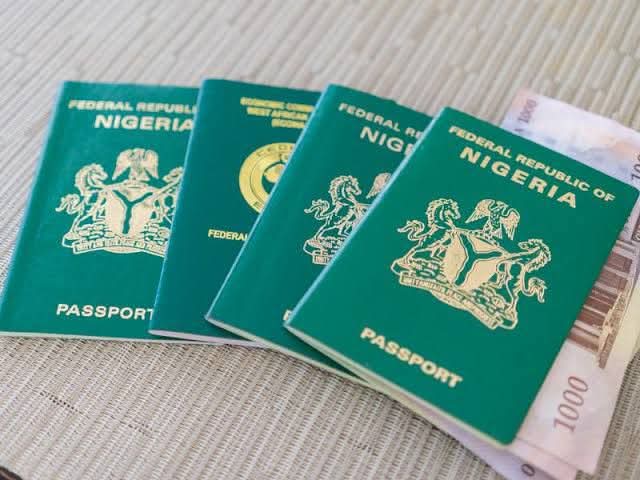
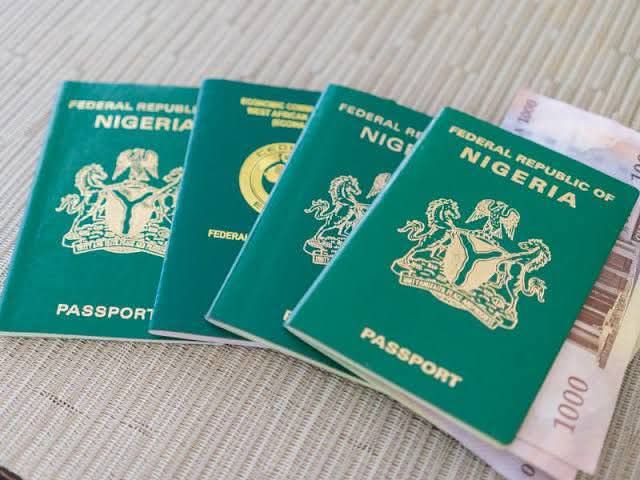
In a promising development that reflects the country’s gradual re-emergence on the global mobility stage, Nigeria’s passport has climbed to its highest ranking in more than a decade, according to the latest Henley Passport Index released on 18 July 2025. The Nigerian travel document now ranks 88th out of 199 countries, up from 91st in January and 92nd in mid-2024—marking a five-point leap since 2023 and its most significant upward movement since 2014, when it peaked at 79th.
While still trailing many African and global counterparts, this quiet yet consistent improvement represents a noteworthy turnaround for what has long been regarded as one of the continent’s least powerful passports. Between 2020 and 2021, Nigeria saw its ranking drop to as low as 103rd, amid global restrictions and institutional inefficiencies. Today, however, citizens enjoy visa-free or visa-on-arrival access to 45 countries, with prospects of more access on the horizon as diplomatic and administrative reforms continue to take root.
Observers widely attribute this recent progress to a wave of institutional restructuring and tech-driven innovation championed by Nigeria’s Minister of Interior, Hon. Dr. Olubunmi Tunji-Ojo, whose leadership has reshaped the outlook and credibility of Nigerian travel documentation. Since assuming office, Tunji-Ojo has led a series of targeted interventions aligned with President Bola Ahmed Tinubu’s Renewed Hope Agenda, with a clear focus on restoring dignity to Nigerian identity and removing the bottlenecks that have long plagued passport issuance and international mobility.
Among these reforms is the introduction of the automated passport application process—an effort to streamline and digitalise the application pipeline while reducing human interference and corruption. In addition, under his stewardship, passport production timelines have been drastically shortened, with the launch of e-gate systems, expanded passport processing centres across major cities and the diaspora, and a new commitment to data integrity and user experience.
These reforms have gone hand-in-hand with a recalibrated diplomatic push, where Nigeria is actively engaging bilateral partners to widen its visa-free corridors and reinforce mutual travel agreements. The renewed credibility of the passport is not only symbolic of improved internal processes, but also of the country’s efforts to rebuild trust with international institutions and border authorities.
A key figure in this transformation is also the recently appointed Comptroller-General of the Nigeria Immigration Service, Kemi Nanna Nandap, who has provided operational leadership in executing these strategic shifts. Her tenure has been marked by greater efficiency in service delivery, increased accountability within passport offices, and a commitment to aligning the NIS with global standards.
Despite the gains, Nigeria’s passport still ranks behind most African peers, surpassing only six countries on the continent: the Democratic Republic of Congo, South Sudan, Sudan, Eritrea, Libya, and Somalia. In contrast, Seychelles remains the highest-ranking African country—despite slipping two places globally—offering its citizens visa-free access to 156 destinations.
Globally, Singapore retained its number one position with visa-free access to 193 countries, while Afghanistan remains at the bottom of the index, granting citizens entry to just 25 countries without a prior visa.
Compiled in partnership with the International Air Transport Association (IATA), the Henley Passport Index is widely regarded as the world’s most authoritative ranking of passport strength, measuring the freedom of citizens to travel without administrative barriers.
While the progress may appear modest on the surface, it signals something deeper: a renewed trust in Nigerian systems, a fresh embrace of digital governance, and a coordinated effort to reposition Nigeria in the global travel ecosystem. The passport—a small booklet often underestimated—has once again become a symbol of national dignity, and under the combined stewardship of Hon. Tunji-Ojo and CG Nandap, it is steadily regaining its strength.
If this trajectory continues, and with sustained policy consistency and diplomatic engagement, the Nigerian passport may soon climb higher in the global ranks—restoring both convenience and confidence for millions of Nigerians eager to connect with the world.